


By Dr. Matt Kauffman
When I tell a patient they may need to consider a corneal transplant, I understand it can sound intimidating. My goal is always to slow things down, explain clearly, and help you understand that today’s corneal procedures are highly advanced, precise, and often very successful.
Here at Contemporary Eye Care in Katy, I evaluate and co-manage patients who may require corneal surgery. While I don’t perform transplant surgery in our office, I work closely with trusted corneal specialists to guide you through diagnosis, referral, and post-operative care.
Let me walk you through what a corneal transplant is, and the different types available today.
What Is a Corneal Transplant?
Your cornea is the clear, dome-shaped surface at the front of your eye. It plays a major role in focusing light and creating clear vision. If the cornea becomes scarred, swollen, or structurally unstable, vision can become distorted or cloudy.
A corneal transplant, also called keratoplasty, replaces damaged corneal tissue with healthy donor tissue. Thanks to modern surgical techniques, many procedures today are partial-thickness transplants, meaning we only replace the damaged layer instead of the entire cornea.
For additional medical information, the American Academy of Ophthalmology provides excellent patient education resources.
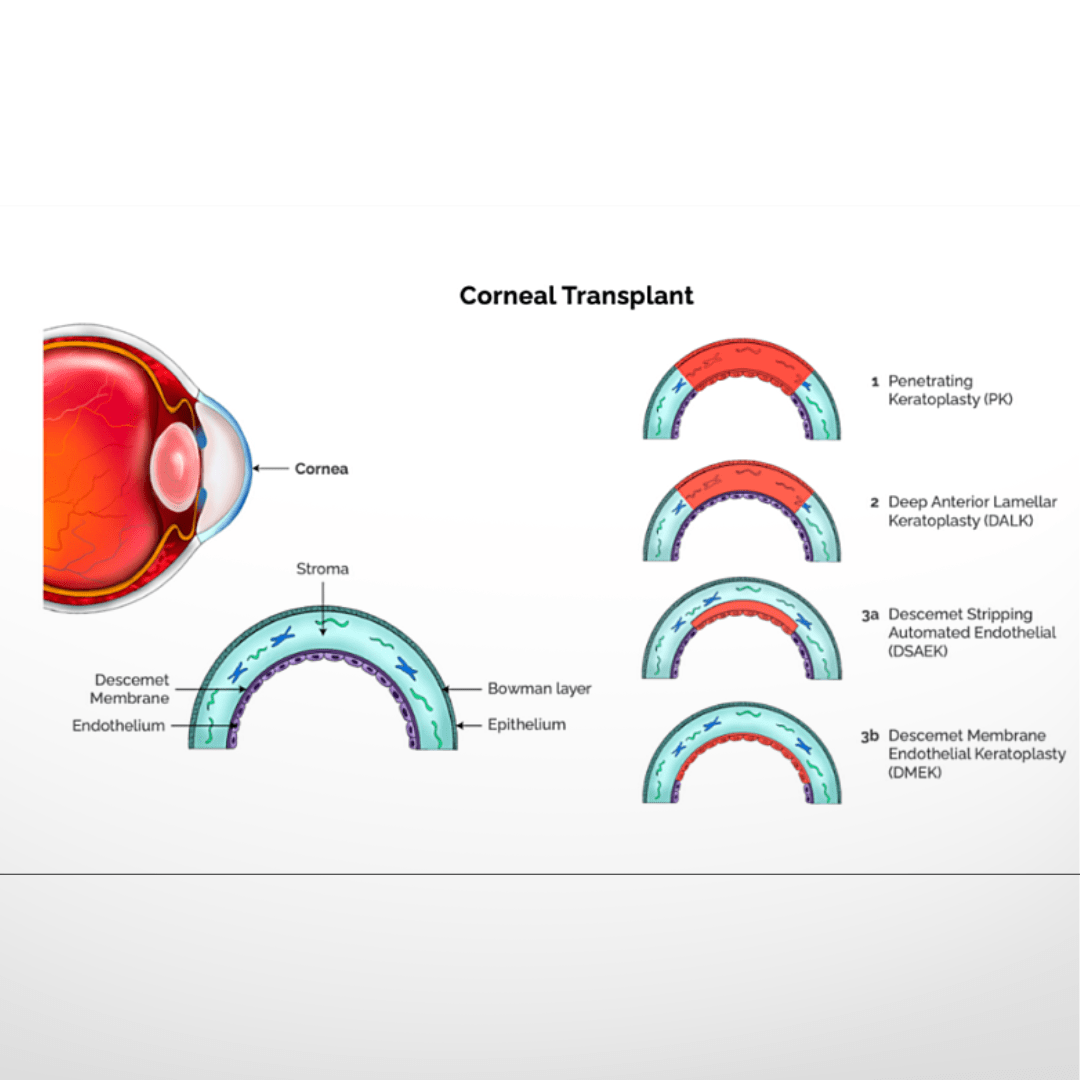
Alt Text: Medical diagram comparing corneal transplant types including PK, DALK, DSAEK, and DMEK layers
The Different Types of Corneal Transplants
One thing I always explain to patients is that not all corneal transplants are the same. The type recommended depends on which layer of your cornea is affected.
1. Penetrating Keratoplasty (PK)
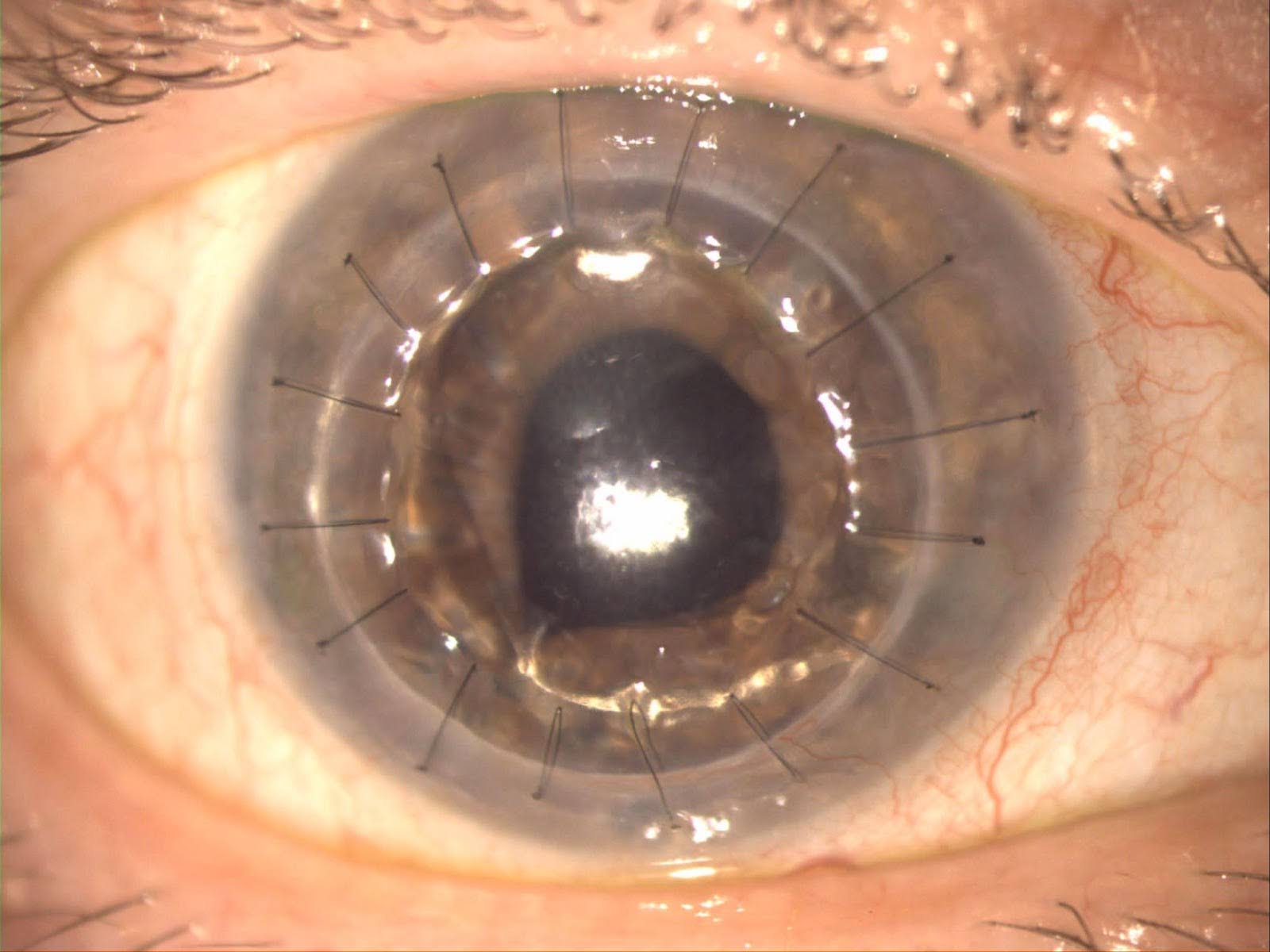
This is the traditional full-thickness corneal transplant. The entire cornea is replaced with donor tissue.
I typically see PK recommended for:
- Advanced keratoconus
- Severe corneal scarring
- Significant trauma
- Certain infections
While it remains very effective, healing can take longer compared to newer, more targeted procedures.
2. Endothelial Keratoplasty (EK)
This procedure replaces only the innermost corneal layer, the endothelium. I most often see this recommended for patients with Fuchs’ dystrophy or chronic corneal swelling.
There are two primary forms:
DSEK / DSAEK
A thin layer of donor tissue replaces the damaged endothelial cells.
DMEK
An even thinner and more refined transplant that often allows for faster visual recovery and lower rejection risk.
From a clinical standpoint, these procedures are less invasive and often result in smoother recoveries.
3. Deep Anterior Lamellar Keratoplasty (DALK)
When only the front and middle layers of the cornea are damaged, surgeons may perform DALK. This preserves the healthy inner layer of your cornea.
I commonly see DALK recommended for:
- Keratoconus
- Surface scarring
- Certain corneal dystrophies
Because the inner layer remains intact, rejection risk can be lower compared to full-thickness transplants.
When Do I Refer a Patient for a Corneal Transplant?
At Contemporary Eye Care, I use advanced diagnostic tools during comprehensive eye exams to closely evaluate corneal health. Some of the most common reasons I refer patients include:
- Keratoconus progression
- Fuchs’ endothelial dystrophy
- Severe corneal scarring
- Persistent corneal swelling
- Complications from prior surgery
Early detection is key. In some cases, we can slow progression or manage symptoms before surgery becomes necessary. You can learn more about our full scope of care.
My Role Before and After Surgery

Even though a corneal surgeon performs the procedure, I stay involved throughout your care.
Before surgery, I make sure to:
- Monitor disease progression
- Coordinate referrals
- Ensure you understand your options
After surgery, I also:
- Monitor healing
- Manage medications
- Watch for signs of rejection
- Fit specialty contact lenses if needed
Some patients need scleral or rigid gas permeable lenses after healing to achieve their best vision. That’s something we regularly manage in our office.
If you’ve been told you may need a transplant, or you’re experiencing unexplained vision changes, I encourage you to schedule an evaluation through our Contact Page
Are Corneal Transplants Safe?
This is one of the first questions patients ask me.
Corneal tissue is carefully screened and regulated. Organizations like the Eye Bank Association of America establish strict standards for donor safety and tissue handling.
Corneal transplants actually have one of the highest success rates among transplant procedures. Because the cornea does not have a direct blood supply, rejection rates are lower than many other types of transplants.
What I Tell My Patients in Katy
If you live in Katy and you’re facing the possibility of a corneal transplant, my advice is simple: don’t panic, but don’t delay care.
Modern corneal surgery is more advanced than ever. With the right diagnosis, careful surgical planning, and proper follow-up, outcomes are often excellent.
At Contemporary Eye Care, my priority is making sure you understand your condition, your options, and your path forward. If you’re concerned about corneal health or experiencing changes in vision, let’s evaluate it early and create a plan together.
Your vision matters, and we’re here to protect it.